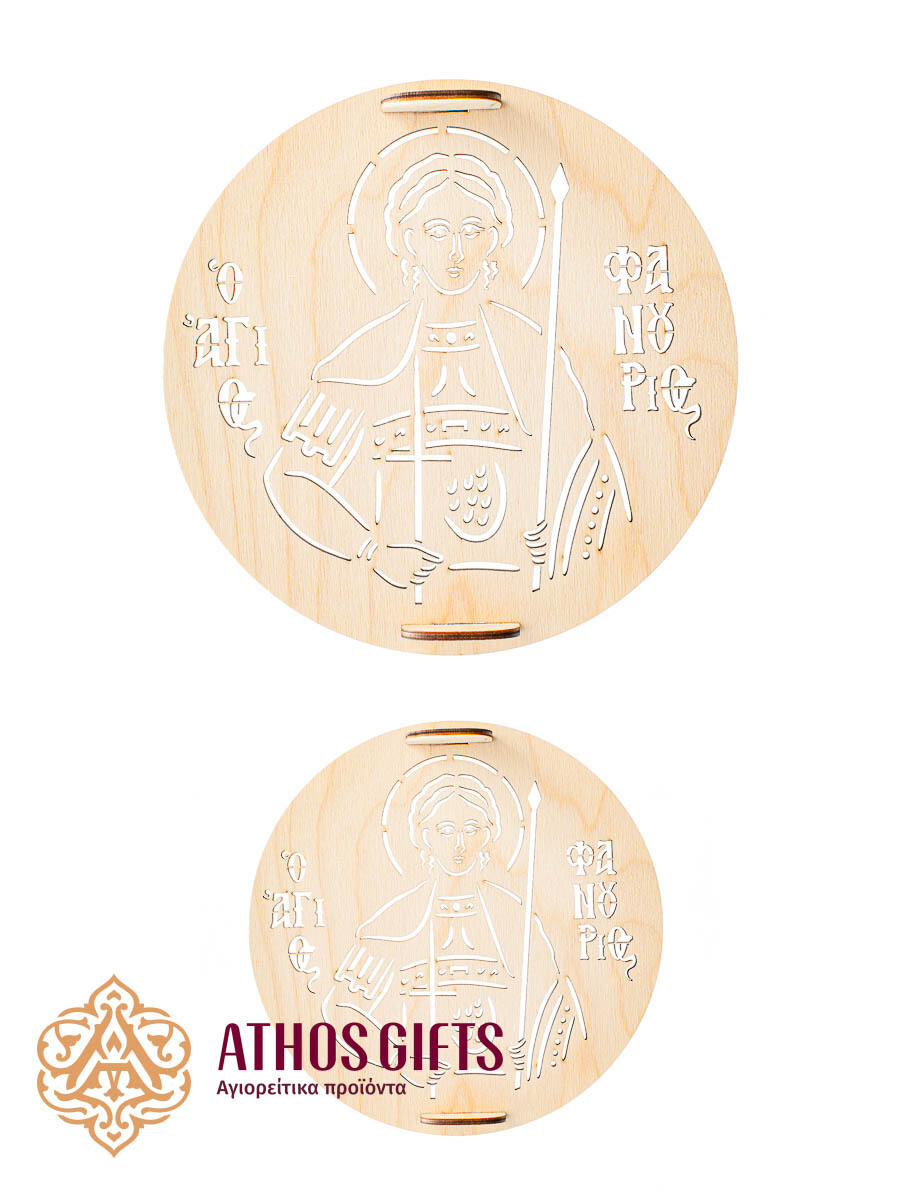
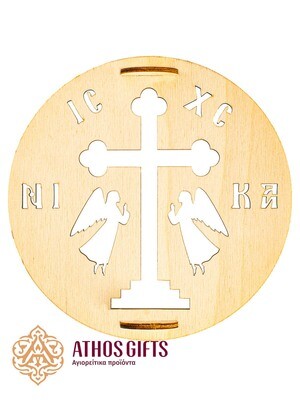
Seal for Koliva Saint Phanourios
SKU HC1065A
8,00 €
Sold out
Size
Wooden seal for the decoration of the koliva with a pattern depicting Saint Phanourios
Sold out
Save this product for later
Seal for Koliva Saint Phanourios
Product Details
Koliva
Koliva (kollyva, kollyba, or kolyvo) is a dish made of whole-grain wheat. Sometimes barley, millet, or rice are used instead. Another ingredients of the koliva are sugar or honey, as well as nuts, dried fruits, breadcrumbs, sesame seeds and pomegranate. The top of the koliva is sometimes decorated with white or silver colored candies.
Each ingredient of koliva has its own symbolic meaning. Wheat grains symbolize a person who, much like a grain, is a child of the earth. We lie down in the earth in order to rise again to eternal life by Lord's mercy. Honey and sugar symbolize the sweetness of Heaven. Raisins represent Jesus Christ, who is the True Vine. The pomegranate symbolizes the splendor and grace of Heaven. Nuts are life, which prolongs itself. Finally, white candy symbolizes bones, which, unlike corruptible flesh, remain unchanged.
How to use
Cover the surface of the koliva with powdered sugar. Then place a seal on top, in the center of the dish. Sprinkle cinnamon in order to capture the pattern of the seal. Finally, remove the seal as carefully as possible, in order to not disturb the pattern.
Saint Phanourios
Saint Phanourios, also known as St. Phanourios the Newly-Manifest, is recognized as a saint by the Eastern Orthodox Church.
Almost all the information available regarding this saint originates from the icon discovered in the 16th century on the island of Rhodes. According to some traditions, his mother was a woman perceived as sinful, whom saint Phanourios ardently prayed for, despite her reluctance to repent during her lifetime. His iconography strongly suggests that he was a soldier who endured severe torture and met his demise at the hands of Ottoman Turks, following their occupation of the island.
Years later, a group of non-Christian construction workers stumbled upon an icon of Saint Phanourios amidst the ruins of chapel, alongside other icons. The Bishop of Rhodes was summoned to inspect the discovery, subsequently declaring Phanourios to be a saint. The reverence for Saint Phanourios then began to spread, first to Cyprus and later to Greece.
Saint Phanourios is commemorated on August 27
You May Also Like

Display prices in:EUR